Designing A Room That Can Age
A guide to choosing materials, silhouettes, and lighting decisions that still feel grounded years later.
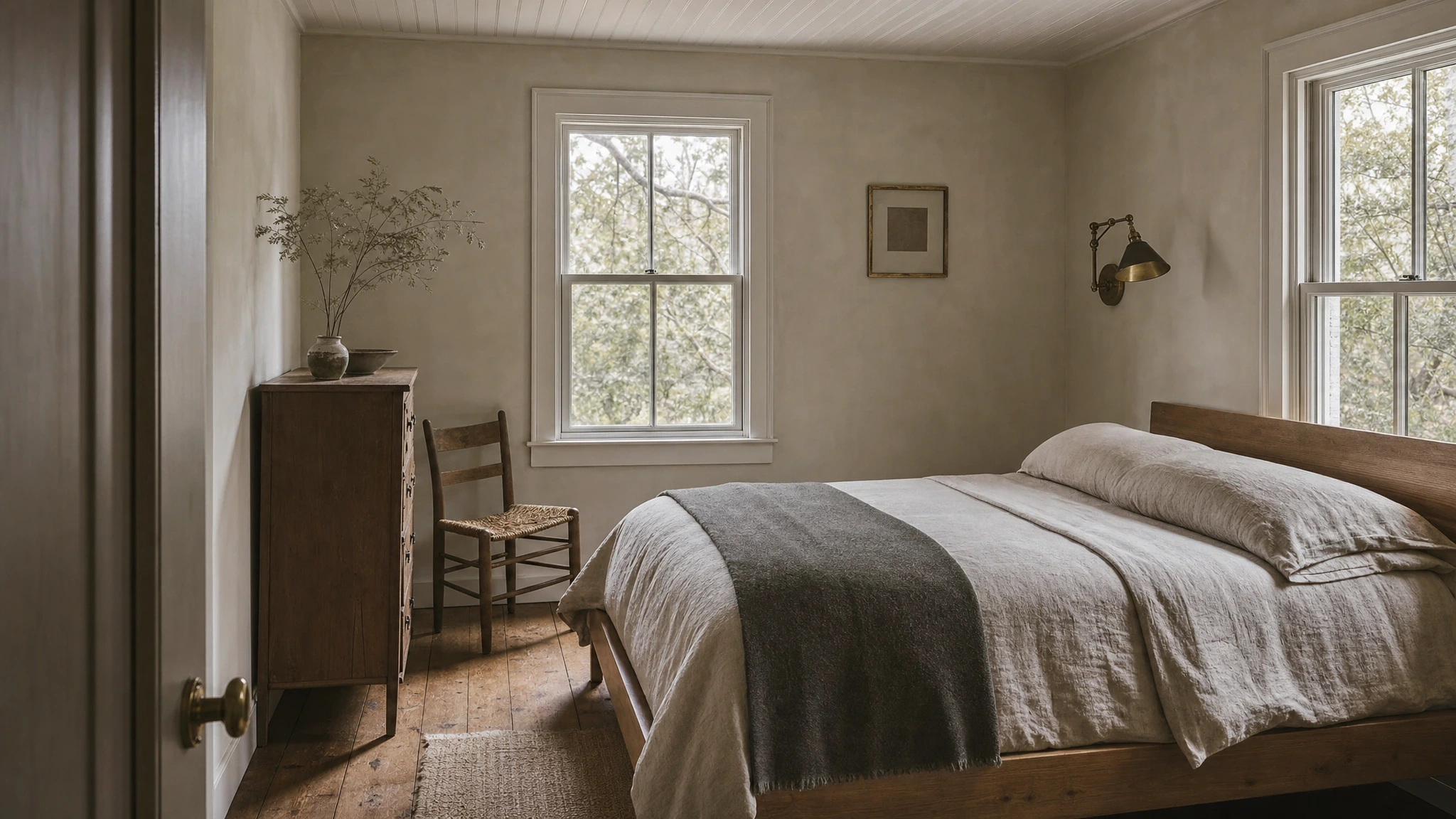
A room ages well when the first decisions leave enough room for use, repair, and changing routines. The work starts with material, scale, light, and restraint.
Give the room a longer horizon
A room should be able to hold new objects and different routines without losing its center. That requires stronger bones than styling can provide: good proportions, clear circulation, durable surfaces, and a small number of materials that belong together.
Begin by asking what will still be true in ten years. The room may need to host different furniture, different art, children getting older, aging parents, pets, guests, or quieter daily habits. The fixed decisions should be steady enough to carry those changes.
Choose materials that can take touch
Honed stone, oiled wood, woven linen, unlacquered metal, and plaster all record time differently. Choose them for how they behave, not for how they photograph on the first day.
Ask what happens after water, sun, hands, shoes, and cleaning. Can the wood be repaired? Will the stone etch? Is the textile washable enough for the room? Does the metal darken in a way the client accepts? Does the wall finish belong in a hall that takes daily contact?
Patina is not a magic word. A marked surface is only beautiful when the owner expected the marks and still likes the material.
Keep silhouettes quiet
Long-lived rooms usually rely on furniture with plain lines, useful scale, and one clear job. A chair can be generous without becoming theatrical. A cabinet can hold a wall without asking to become the whole story.
Look at outline before upholstery or finish. If the silhouette depends on a trend to feel interesting, it may tire quickly. If the shape has good proportion, the room can change around it.
This does not mean every piece should be plain. It means the room needs a few stable pieces before it can carry a stronger lamp, an old table, or a strange artwork.
Light for ordinary hours
Aging is tested at 7 a.m. and 9 p.m. Use fewer fixtures with better placement: task light where hands work, low light where people gather, and enough darkness for the room to rest.
Rooms that depend on perfect afternoon sun often disappoint at night. Add lamps where people sit. Place sconces where walls need depth. Keep ceiling light from flattening every surface. Make the switches easy enough that the room can change mood without effort.
Good light helps older materials stay beautiful. It lets texture show without turning every mark into a defect.
Leave room for the unplanned object
A house will collect things after install: a painting from a trip, a child's ceramic bowl, a chair inherited from family, books that were not styled into the original shelves. A room that ages well has space for those arrivals.
Avoid filling every surface on day one. Leave a wall with room to breathe. Leave a shelf partially open. Let one table stay useful. The room will feel less staged and more ready for life.
Edit before adding
When a room starts to feel tired, start with subtraction. Remove the object that is doing too much. Repeat the material that already works. Move the small table that blocks a path. Replace a shade before replacing the lamp.
A room with good structure can take small edits for years. That is the real test. It does not need a new identity every time taste shifts. It needs enough discipline at the beginning to make later changes feel natural.