How To Build A Material Palette
A practical editorial pattern for explaining stone, wood, textiles, metal, and paint as one system.
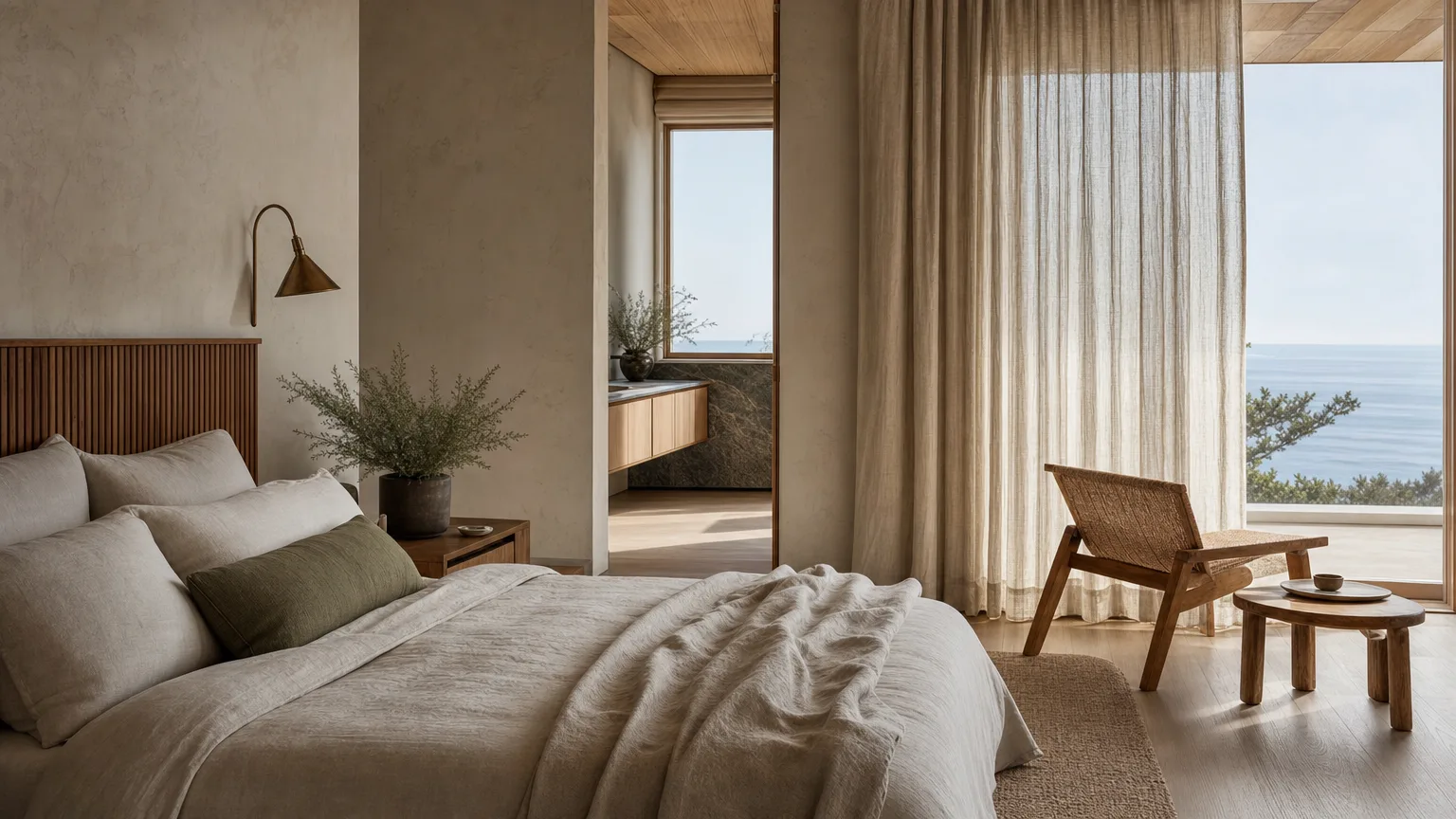
A practical editorial pattern for explaining stone, wood, textiles, metal, and paint as one system.
Begin with fixed surfaces
Start with the materials that are hardest to change: floor, stone, plaster, cabinetry, and metal finish. These choices set the temperature of the room before furniture or styling enters.
Build a narrow language
A palette does not need many notes. It needs clear relationships. Pair one mineral surface with one wood direction, one woven texture, one metal, and a wall finish that can carry quiet variation.
Let one material carry warmth
If every surface tries to warm the room, the result becomes muddy. Let oak, walnut, clay, or aged brass do the warm work, then keep surrounding surfaces cooler and calmer.
Test samples in real light
Move samples through morning, afternoon, and evening before deciding. A stone that looks soft under retail lighting can turn sharp under coastal glare. A paint that reads cream in shade can become yellow beside brass.
Write the rules before purchasing
The palette should answer future questions: which whites are allowed, which metals repeat, which woods are off-limits, and where contrast is useful. Good rules protect the room from slow drift.